




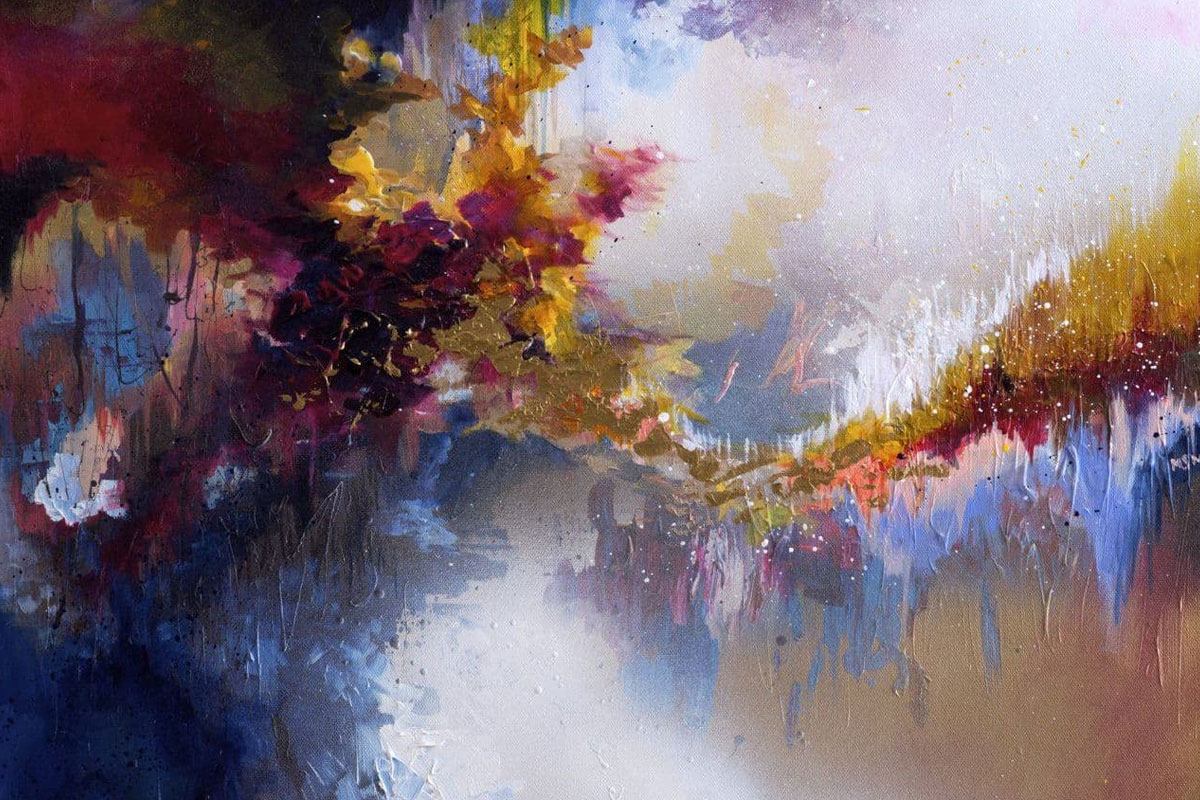
What happens when music is not only heard but seen? For a small percentage of people, sound automatically translates into color, shape, and movement. This phenomenon, known as chromesthesia, is a form of synesthesia where the senses intertwine. For those who experience it, each melody or rhythm carries a visual counterpart, an unfolding canvas of tones, shades, and textures. The result is what we call chromesthesia paintings: artworks that are born directly from music itself.
Music Visualization Art: Seeing the Invisible
Unlike traditional art that begins with a sketch or idea, chromesthesia paintings begin with sound. A rising violin note may curve into a streak of yellow light, while a bass drum reverberation might take shape as deep shadows or geometric pulses. This process, often described as music visualization art, turns ephemeral sound into a permanent, visual language. The canvas becomes a diary of auditory experience, a frozen translation of music into imagery.
Famous artists such as Kandinsky hinted at this connection between sound and visuals, but chromesthesia intensifies it. For the artist who transposes music into images, every track becomes both an emotional and neurological map.
Intimate Disclosure: Living Between Senses
For me, music does not end with the ears. It arrives as a force that fills the visual field, colors racing, patterns shifting, sometimes too quickly to capture. Translating those fleeting impressions into paintings is both exhilarating and overwhelming. Each finished canvas feels less like a product and more like a revelation. It is not simply art about music; it is art that is music, reimagined through another sensory lens.
This experience is deeply personal, yet it creates a shared language. A listener may hear passion in a melody, and when they see its translation, a surge of red strokes across the canvas, they feel a confirmation of something they could not otherwise articulate.
Therapeutic Music Artwork: Healing Through Color and Sound
Beyond its artistic appeal, this process holds therapeutic potential. Neurologists and psychologists are beginning to investigate how synesthetic processes might open new pathways of communication, particularly for individuals on the autism spectrum. By externalizing music as visuals, therapeutic music artwork can serve as a bridge, offering both self-expression and emotional release.
Art therapists in Boston and beyond are exploring how the interplay of sound and color can reduce anxiety, spark creativity, and provide patients with a safe outlet for inner experiences. Each painting becomes more than decoration; it is a mirror of the psyche, a vessel for healing.
The Journey Continues
Chromesthesia paintings invite viewers to witness what usually remains invisible. Through the medium of music visualization art, we glimpse a universe where senses merge and boundaries dissolve. And when those creations are used as therapeutic music artwork, they remind us that art is not just for beauty, it is for transformation, discovery, and healing.
For those who listen with their eyes, every song holds the possibility of becoming a painting, and every painting holds the memory of a song.