




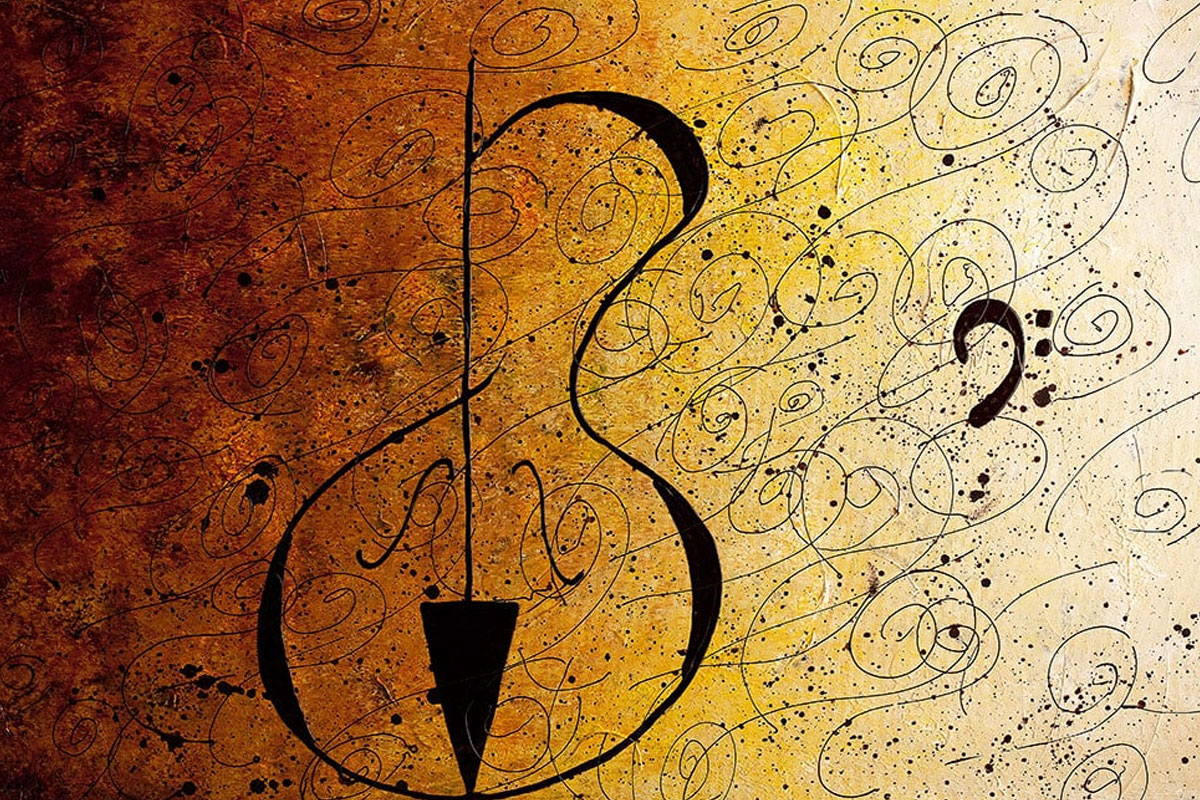
Art has always been a dialogue between the visible and the invisible. In the realm of abstract music paintings, this dialogue becomes deeply profound, as music is transformed into art that transcends form and ventures into the spiritual. For those who experience chromesthesia or who view art as a portal to inner discovery, each painting becomes not just a visual composition, but a spiritual music painting, an exploration of vibration, energy, and essence.
The Philosophy of Sound Made Visible
At its core, music is vibration. When those vibrations are expressed through color, texture, and form, they take on an entirely new dimension. Abstract music paintings embody this transformation, weaving together rhythm, harmony, and silence into canvases that invite contemplation. Unlike representational art, abstraction resists confinement; it allows viewers to enter a state of openness where personal interpretation becomes as important as the artist’s intent.
Music Transformed into Art
When music is transformed into art, something ineffable occurs. A melody that once existed only in the moment can be given a timeless presence on canvas. Each brushstroke carries the resonance of a chord, each layer of color echoes a progression, and the interplay of shapes becomes a silent score waiting to be read by the heart. For some, this is not merely art, it is a metaphysical act of translation, turning the unseen into something tangible yet still fluid.
Spiritual Music Painting as a Journey
A spiritual music painting goes beyond aesthetics. It is not just about colors dancing to notes, but about the resonance of human experience. These works often evoke themes of transcendence, stillness, or divine connection. They can act as meditative portals, inviting the viewer to pause, breathe, and feel the echoes of sound within their own being. For those seeking meaning or healing, such paintings can serve as companions on the path to self-discovery.
The Universal Language of Abstraction
What makes abstract music paintings powerful is their universality. No single culture owns the relationship between music and art, it is something felt across time and geography. Whether born from jazz improvisation, classical symphonies, or sacred chants, each spiritual music painting carries the potential to unify sound and sight into a shared, deeply human experience.
Conclusion
Abstract music paintings reveal how music transformed into art can become a spiritual music painting, an artifact of both sound and silence. They remind us that creativity is not just a skill but a practice of listening, listening not only to music, but to ourselves, to the unseen, and to the infinite spaces between.